This month I’ve been reconnecting with the land and the history of Aotearoa New Zealand, where I was born and lived until I emigrated over a decade ago. Growing up (and growing up Pākehā) in a settler colonial nation taught me a great deal, though in recent years I haven’t reflected much on how that experience shapes how I think about colonialism and conservation. In this ramble I walk through the forests of southern Fiordland while reading the essay collection In Common and Hana Pera Aoake’s A bathful of kawakawa and hot water.
Like all good adventures, however, I have to get a bit distracted before I actually start, by mentioning the giant sausage of Tuatapere. The town won a competition in 2015 to get a giant monument (a necessity for all rural places in this country), and the townsfolk chose to honour its sausage-making history by requesting an enormous banger. It was made, it was installed… but it was not anywhere to be found in April 2023. Local informants had seen it but were none the wiser about its present location. Any leads are of course greatly appreciated.
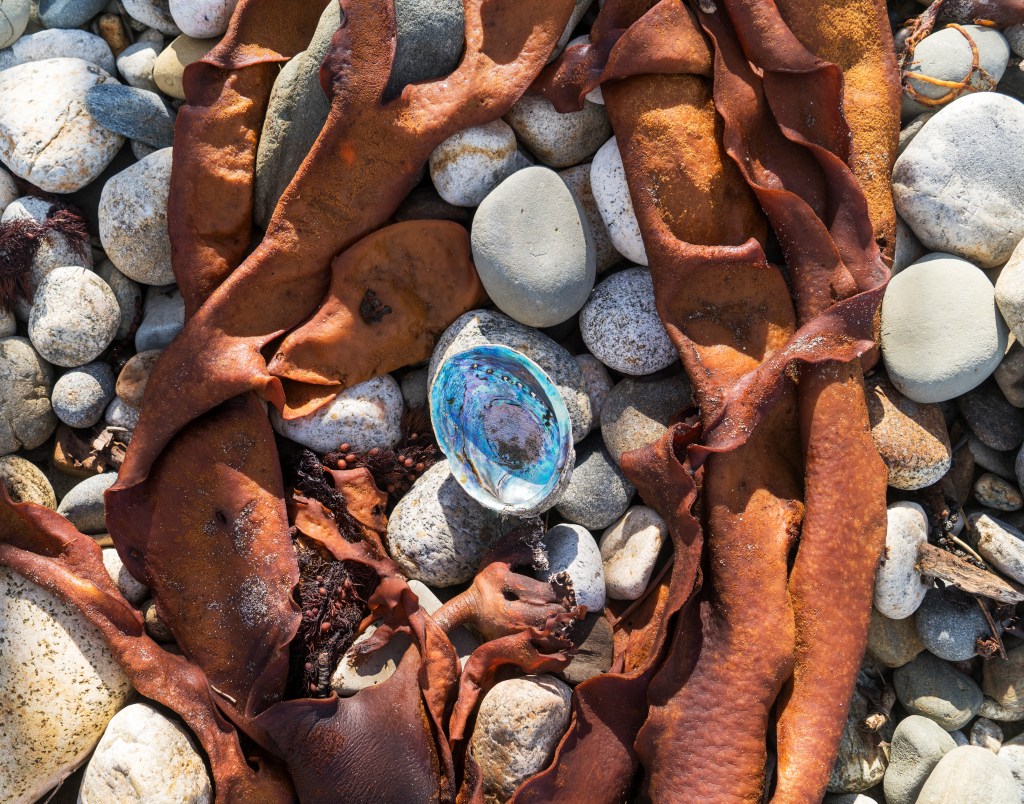
However, my disappointment about the missing giant sausage lifted soon after heading into the bush. Going home always feels like I’m walking through my memories as much as through the present: I’m reminded, suddenly, of all the names I’ve forgotten (kahikatea, korimako) and all species I can no longer easily identify (rimu, totara). I’m walking with my parents, and pīwakawaka flit around us, snatching insects in mid-air; white-bellied kakaruwai eye us up when we pause. Sea lions are barking and chattering from the shore, not quite visible through the trees, while high up in the canopy tuī and korimako are singing. Surprised miromiro burst out of thickets and a gleaming paua shell lies open on the beach in a bed of orange rimurapa (photos all mine).


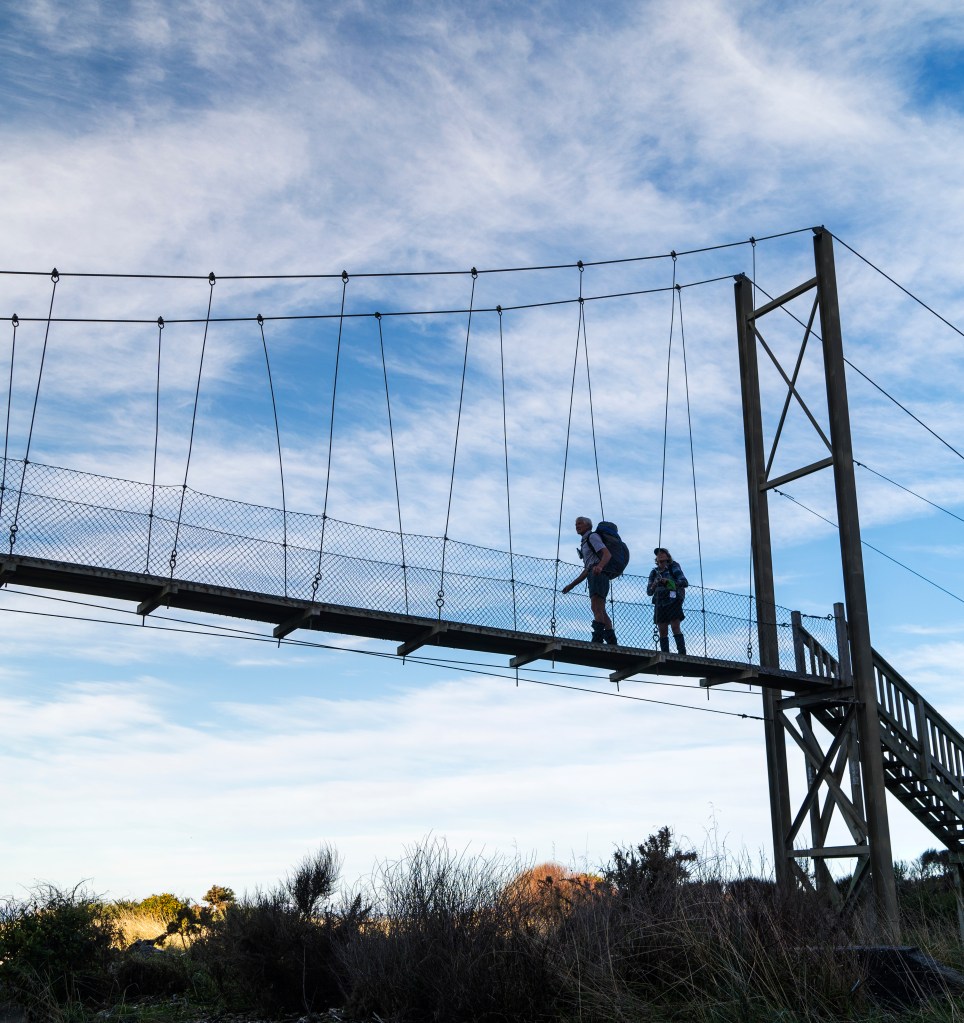
The forest we are walking through is regenerating after being logged in the late 19th and early 20th centuries. Port Craig, our stop for the first night, was once the most productive sawmill in New Zealand. These dense, old-growth forests were seen as “inexhaustible and an impediment to progress” by settlers. European eyes looked at the rich ecosystems around them – which Māori travelled through, gathering food and other resources – and saw emptiness. As Eleanor Cooper writes in In Common, settlers were “blind to the deep connections Māori sustained with what appeared to them to be untamed wilderness.”


By the Depression the sawmill had closed for business, leaving behind a schoolhouse (now a Department of Conservation hut), a long tramway and four huge wooden viaducts built to transport timber. The South Coast Track – which we’re walking – traces this history, as well as the Ngāi Tahu (a South Island Māori iwi, or tribe) peoples’ history of dispossession from this land.

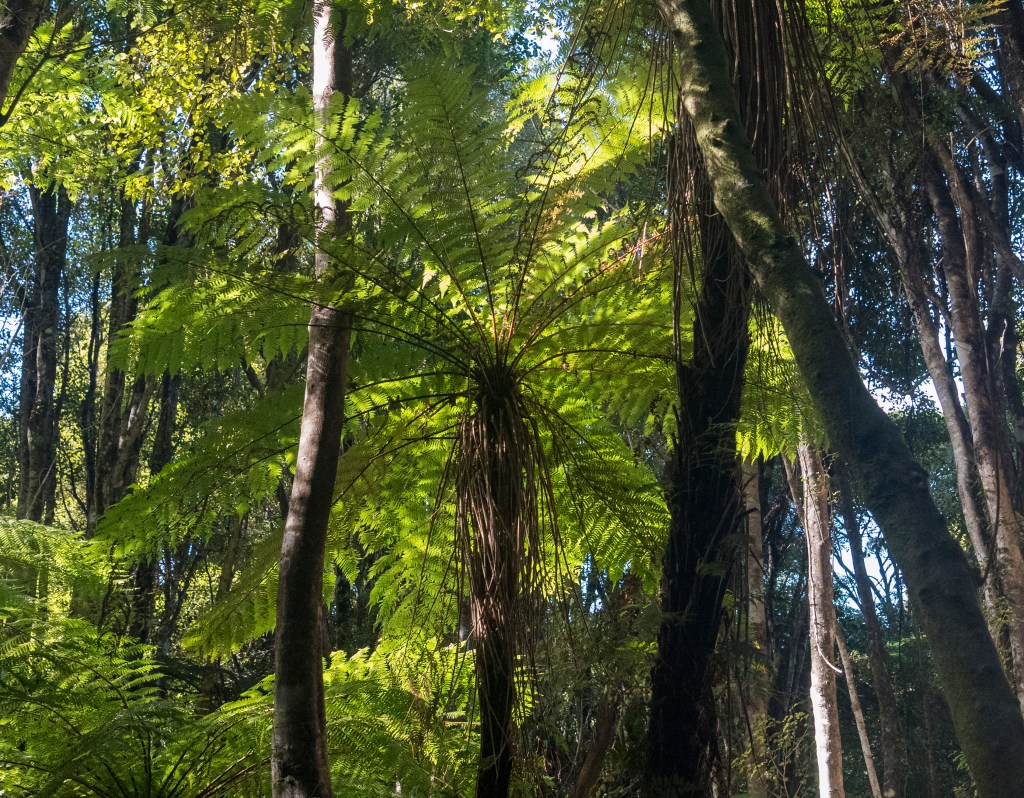
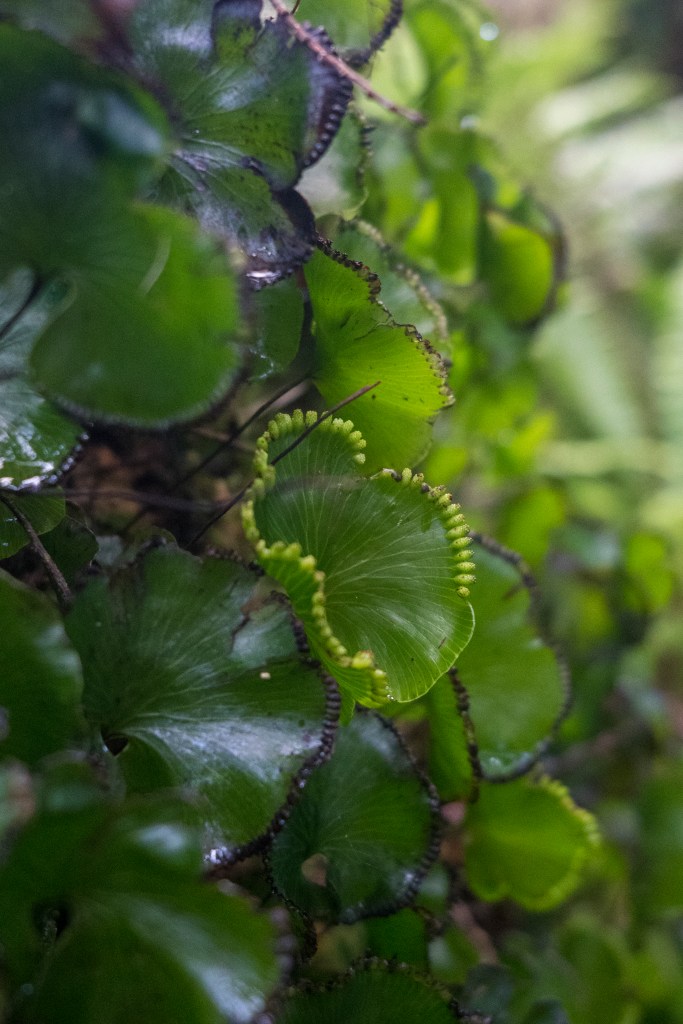
On the second day we reach Waitutu Forest. Much of the lowland forest in Aotearoa New Zealand was cleared in the 19th Century for ‘productive’ use – and Waitutu is a rare stretch of unmodified podocarp forest rising from the sea in a series of terraces. It is dense, mossy, and humid – a complex ecosystem with a complex history to match.

In the mid-1800s, the Crown bought large tracts of the South Island off Ngāi Tahu, with the agreement that they would still have land on which to live and harvest from. By the late 1800s, however, it was clear that the Crown had not honoured the agreement, and Ngāi Tahu – who had once been an integral part of the South Island economy – were being dispossessed from their land and excluded from the economy. Ostensibly to provide livelihoods for impoverished Ngāi Tahu, the South Island Landless Natives Act (SILNA) was passed, and blocks of land were given to landless families. The land provided, however, was land that the Crown considered worthless – and in some cases “far removed from the actual residences of the ‘landless natives.’”
Dividing the land up (itself a foreign concept) and then re-allocating it in cruel, unequal ways is perhaps a common thread in processes of colonisation. As Hana Pera Aoake writes in A bathful of kawakawa and hot water,
Indigenous communities such as Maaori did not share the idea of ‘property’; this was a construction of the English colonial project developed in places such as Ireland and Scotland. English common law was instrumental in the loss of indigenous land in New Zealand.
Hana Pera Aoake

Forests are always such rich, complex and nourishing environments, and I learnt so much from walking through these particular ecosystems. Thanks to the land’s owners for sharing this wonderful place with guests and for teaching us about its history and the history and culture of Ngāi Tahu. And of course, thanks to my parents for taking me there. Nice one.
Thanks for reading!
 Claire Bracegirdle