I’ve been settling into my first month of PhD fieldwork in Wechiau, a small town about 40km outside of Wa (the regional capital of the Upper West Region) on a dusty earth road mainly traversed by kombus (motorbike tricycle taxis). Here I describe some of the things I’ve seen, heard and been learning while finding my feet back in the Upper West.
I’m spending my time in the communities that lie between Wechiau and the Black Volta, riding back and forth on dusty roads and tracks that cut through the open savannah, populated by tall grasses, dawadawa, neem and shea trees. Brightly coloured butterflies waft past while I’m sitting with people, black kites circle above, pied kingfishers swoop along the river and pigeons wake me up by clattering on my corrugated iron roof early in the morning. Harmattan – a dusty Saharan wind that blows across West Africa – is here and with it a slightly cool breeze, hazy horizons and bare trees. I’ve deliberately timed things so I’m here during the dry season (when people aren’t doing as much farming, so my presence is hopefully less annoying) and so I’m avoiding the ‘hottest’ part of the year, by which time I’ll have moved south to Kakum for my second stint of fieldwork. As you can probably imagine, I’m sufficiently warm: temperatures average around 35-38C and my freckle coverage has probably increased by 10%.

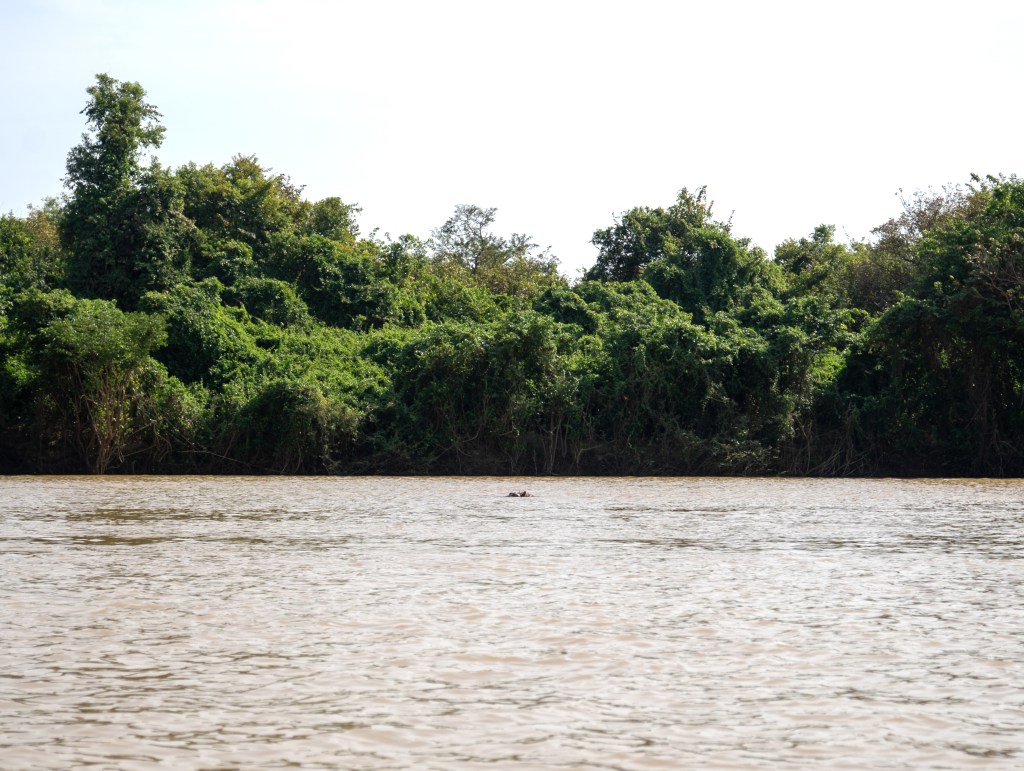
I’m here studying a community-based conservation project. Around 20 communities have banded together to demarcate an approximately 40km stretch of land alongside the Black Volta river as a protected zone, where no farming or hunting is allowed. This provides the greenery that hippos feed on – this stretch of river is home to one of Ghana’s largest hippo populations. I’m focussing on the work of the monitoring team, a group of rangers recruited from the different communities included in the project, and exploring what role the knowledge they hold about the environment plays in what they do.


I’m learning so much about the embodied knowledge that people develop about their environment from their deep connections and inter-dependency with it: how particular leaves cure fevers, how the river can be navigated by watching the movement of the water, how animal tracks can be read, how bird calls can tell you when to start farming or when to expect rain.


I’ve also been indulging my love of the gyil (wooden xylophone) and am currently getting one made by a highly respected master of the art. On my way to meet people and join the activities of the rangers I often pass his house and stop to hear him, or someone learning from him, play. The gyil is very important for funerals, where it’s played throughout along with a drum and bell. Passing a funeral recently, I was able to sit and listen as people around me wailed, danced and threw cowrie shells on the gyil keys to signify respect and appreciation for the player. There’s a wonderful description of Brifor funerals, and the centrality of the music to them, in this article by Colter Harper.
I’ve been reading Wayfinding: The Science and Mystery of How Humans Navigate the World by M.R. O’Connor which has been a great complement to reflecting on how people build and share environmental knowledge over time. I’ve long been interested in alternative cartographies, and what gets left out when remote and top-down ways of knowing a place get emphasised over other approaches (like those that aren’t visual, or are situated, or embodied).
I’ve also been reflecting a lot on environmental memory through conversations with people here; how changes are observed, analysed and passed down through generations. O’Connor writes, in relation to Aboriginal oral history, that
Until very recently, there was a consensus that the longest time period that human memories can be transmitted between generations before their meaning has completely changed or become obscured from the original is five hundred to eight hundred years. But in 2016, two Australian researchers published a paper in the journal Australian Geographer that upended this idea. Patrick Nunn and Nicholas Reid recorded stories from twenty-one locations around coastal Australia, from the Gulf of Carpentaria in the north to Kangaroo Island in the south. In each place they found stories about a time when parts of the coastline now under the ocean were actually dry land. The researchers matched the stories to geological evidence of post-glacial sea-level rise. It seems that these stories have been repeated from one generation to the next for a minimum of seven thousand years but possibly for as long as thirteen thousand years and represent “some of the world’s earliest extant human memories.”
Wayfinding: The Science and Mystery of How Humans Navigate the World, M.R. O’Connor
Thanks for reading!
 Claire Bracegirdle