This month I’ve been understanding the present through reading remnants of the past in the landscapes I’m traversing.
If you had to choose two words to describe Ghana, ‘semiotically rich’ might just cover it. Signs, slogans and symbols cover every available surface and space: taxis bearing mottos like Be Wise and Travel And See pass shops and restaurants like Lack Of Knowledge Suiting Materials And Boutique, Faithful Jesus Carpentry Shop, Do The Right Thing Cold Store, Amazing Power Hydraulic Ventures and Observers Are Worried Chop Bar.1 Sayings, proverbs, religious messages and advertisements are continually being remixed and improvised on producing, in the words of Ato Quayson, a “scintillating zodiac of inscriptions.”
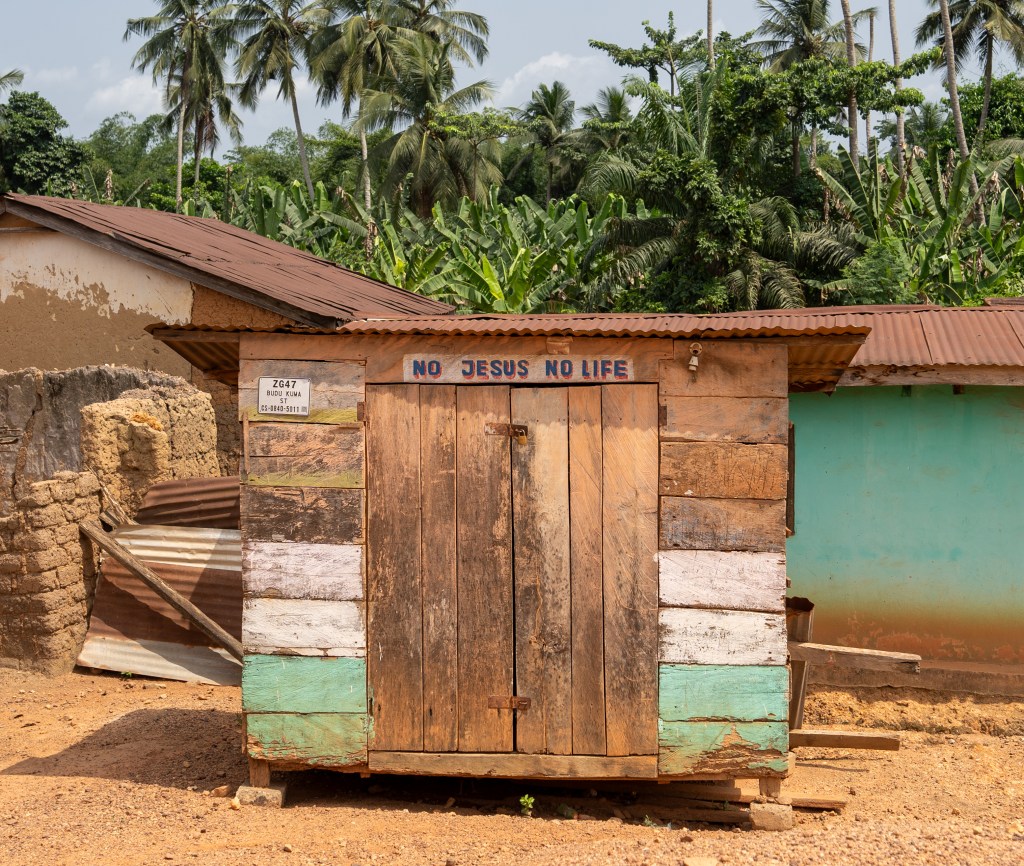
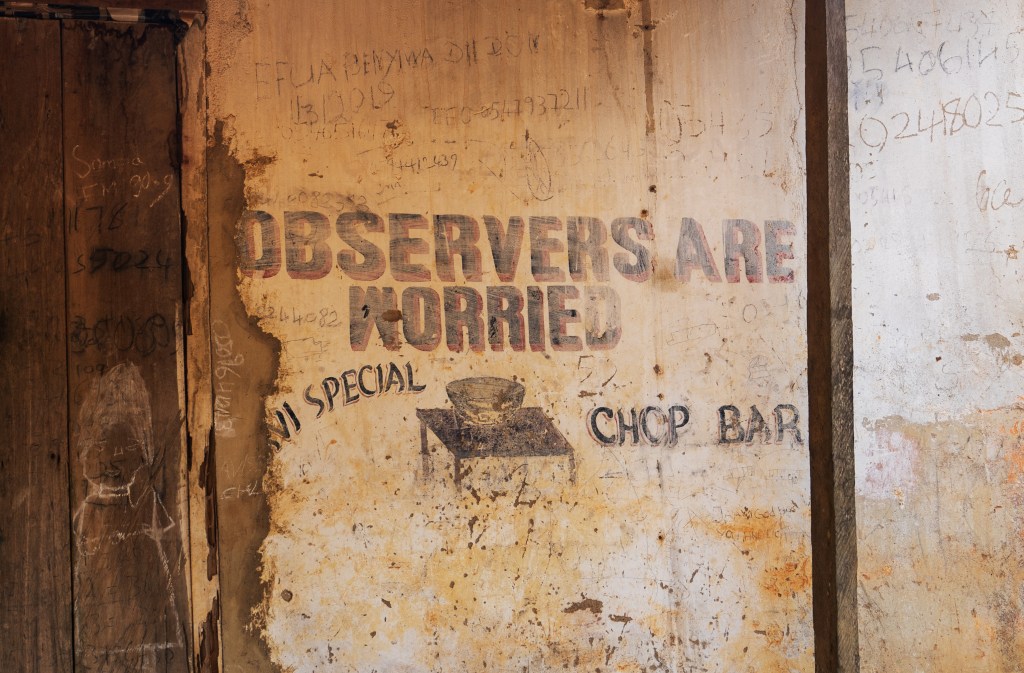
As an outsider, I’m sure I’m missing most of the layers of meaning, but I love what I can perceive of their often-prescient wisdom. Nothing quite compares to sitting in a trotro hurtling almost headlong into an overtaking truck that has HE KNOWS emblazed on the front or noticing the Thanks Jesus sticker holding a cracked windscreen together. Quayson beautifully describes how
…the slogans and inscriptions cover every imaginable vector of urban and social life, from the paranoia regarding witchcraft and the evil eye, to wry social observations on gender wars, family conflicts, political chicanery, the celebration of the lives of drivers and motor vehicles, and even to meta-critical pronouncements on the act of writing itself. Everything that touches on the life of Africans as they make their way through change, transformation, and transition is amenable to the process of entextualization in the form of a slogan or saying.
Ato Quayson, City Life and the Itineraries of Transnationalism
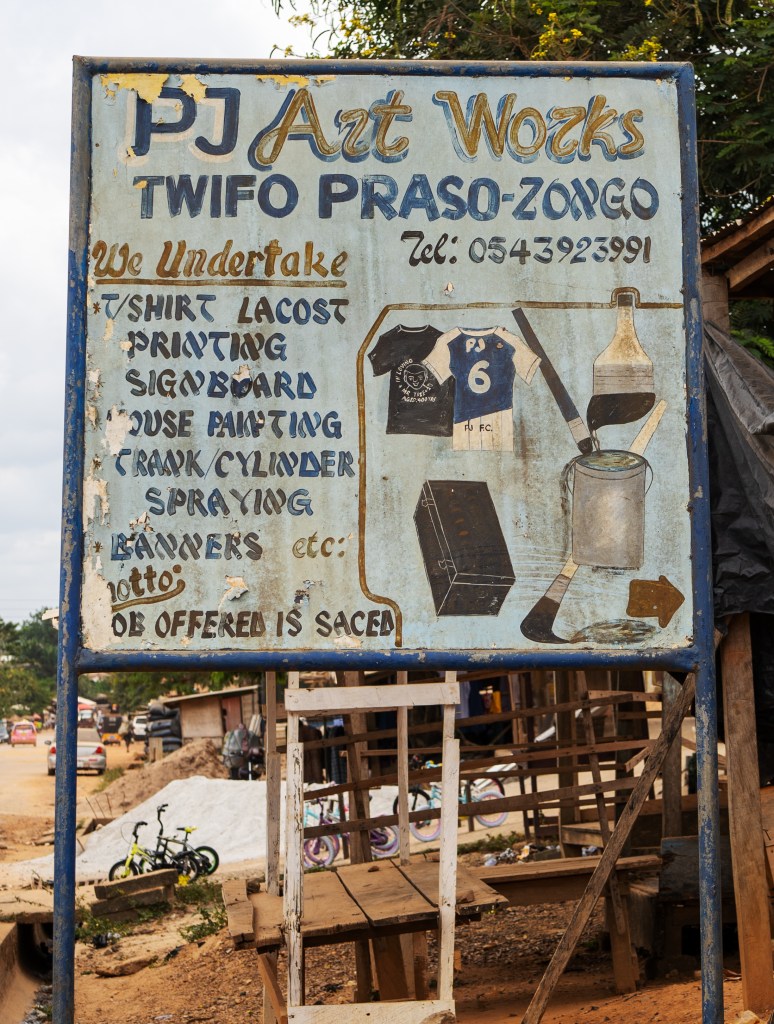
It’s not just about interesting wordplay, however – Ghana (like other sub-Saharan African countries) has a rich tradition of hand-painted signs advertising local barber shops, beauty salons (or, as they’re more often written, beauty saloons. It’s better, no?), shops and restaurants. Even typically homogenised signs, like the corporate logos of telecom companies, are often hand-painted. However, as digital sign printing takes over, hand-painted signs are becoming less prevalent – while at the same time also cropping up in galleries in the West. Some have speculated that when the transition from paint to print is complete, and enough separation makes traditional sign-painting ‘heritage,’ there might be a resurgence of appreciation for the ‘old’ methods of sign-making.
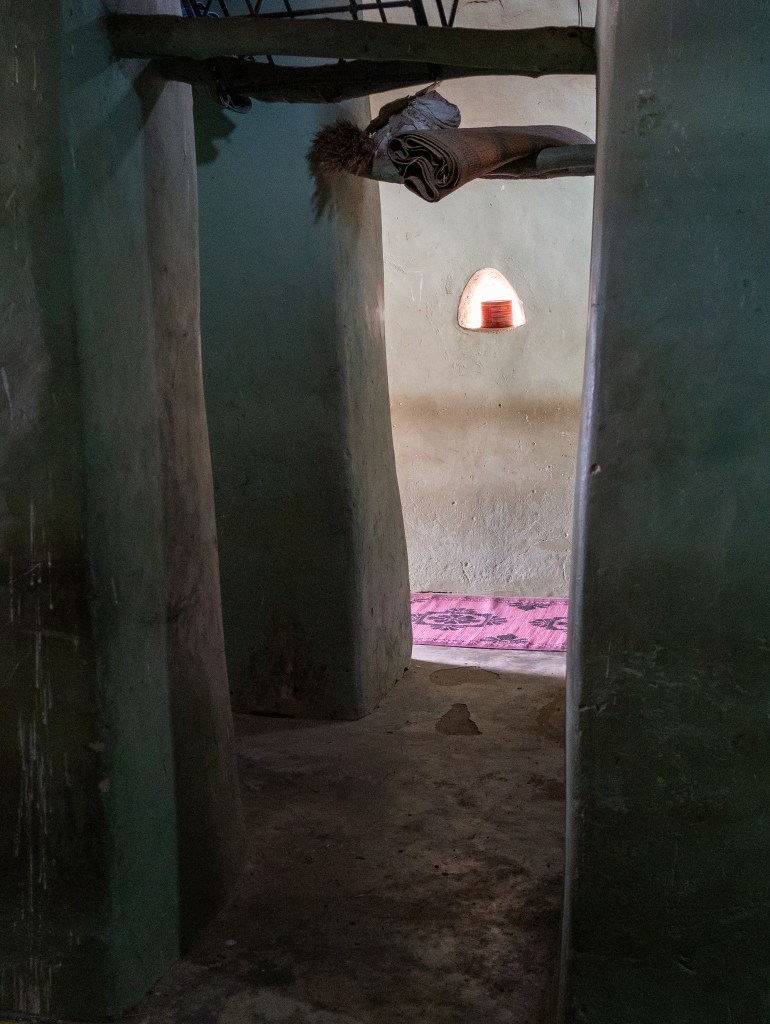
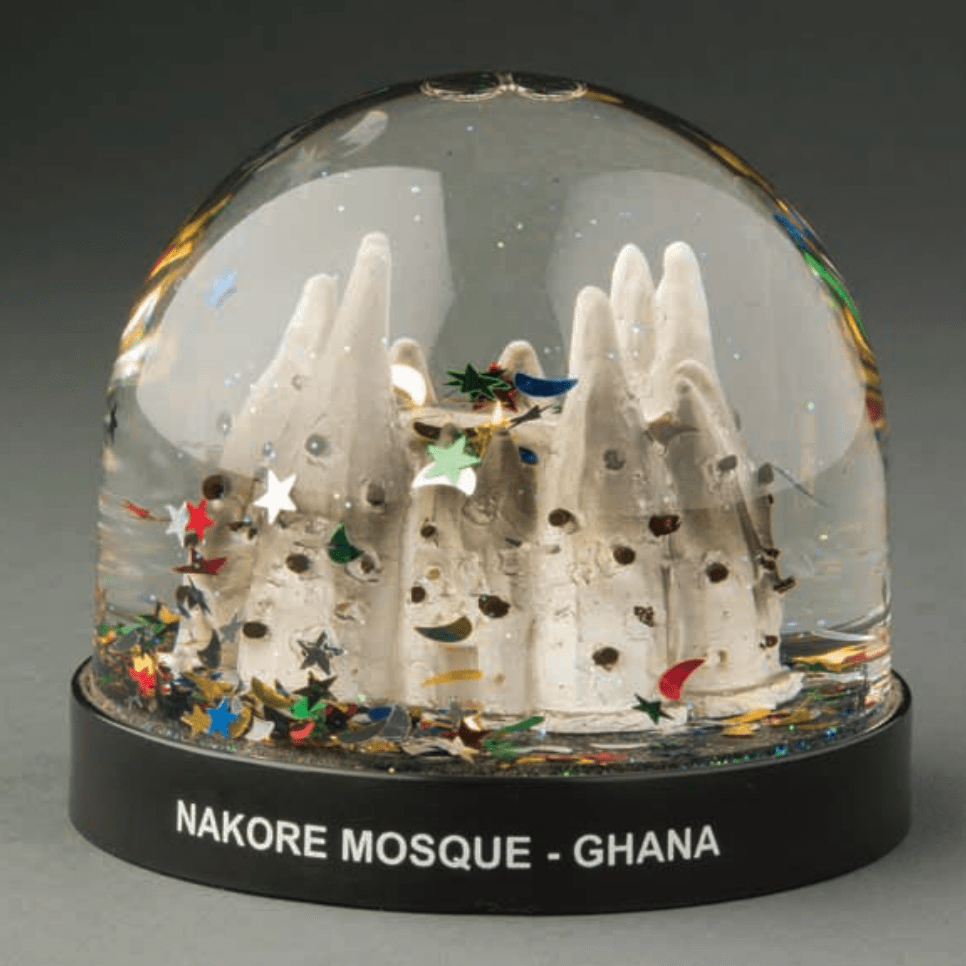
Nakore Mosque sequin-globe from the Spring 2015 edition of African Arts. I have tried and failed to find one one of these for sale…
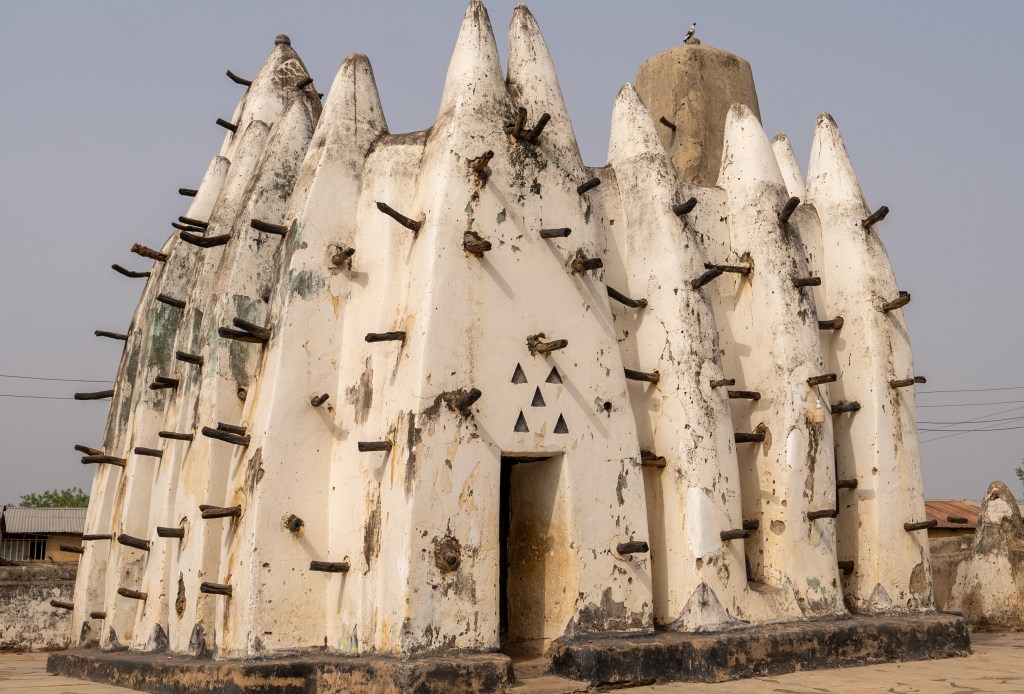
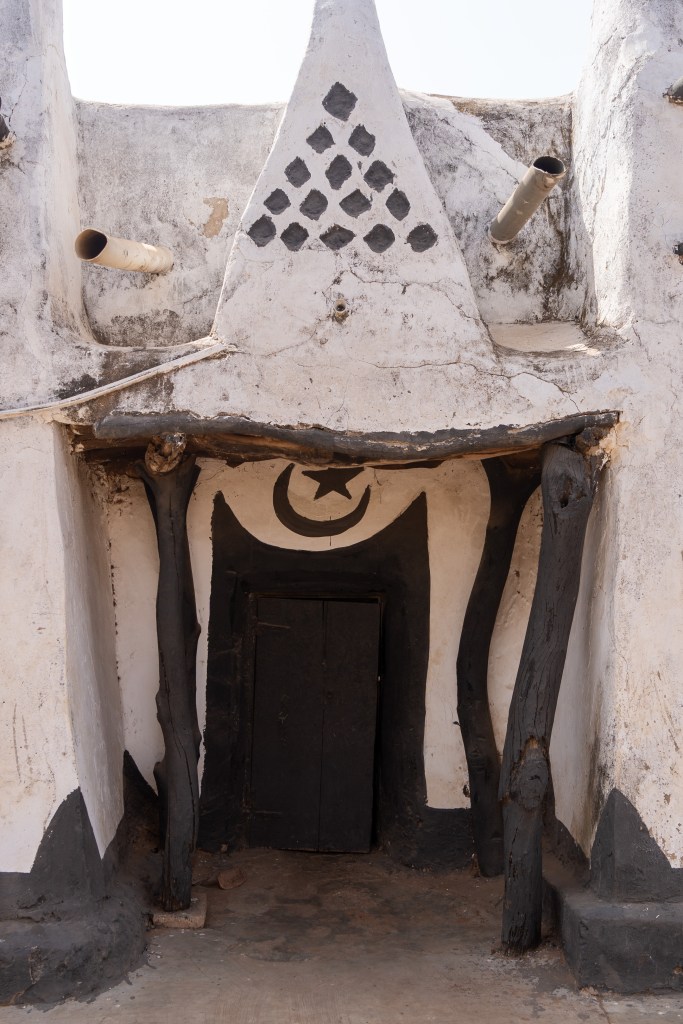
Another ‘old’ thing I deeply appreciate in Ghana is the ancient, earthen mosques found across the north. Islamic architecture from the Sahel was adapted to meet local climactic conditions and building styles, producing bulbous, beautiful structures which are still in use today and are totally unlike any other mosques I’ve seen. Michelle Moore Apostos describes how, inside the Larabanga mosque,
…almost all sensorial stimulation is eliminated by two foot-thick earthen walls and minimal window and door openings, which collectively isolate the individual from the profane environment so as to maximise communion with the divine.
Michelle Moore Apostos, New Meanings and Historical Messages in the Larabanga Mosque
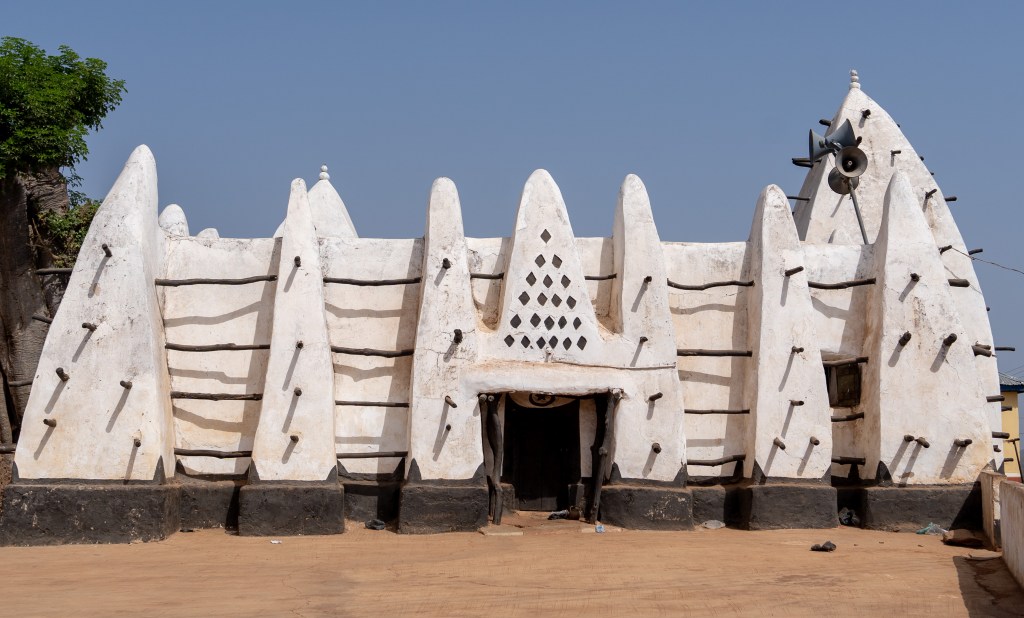
I’d love to visit all the ancient mosques, and was about to head to Bole Mosque recently when, in checking directions, I saw a news article about its collapse in September 2023. As you might expect from very old (Larabanga is estimated to have been built in the early 17th Century) earthen buildings, the mosques’ upkeep and preservation are contested issues. Apostos describes how, following the partial collapse of Larabanga Mosque in 2002, the Larabanga community had different priorities from the international funders supporting its restoration. While the funders wanted the outside to remain an unpainted ‘earthy’ hue, locals wanted to paint it white, a colour more in keeping with its spiritual significance. Following its restoration, and finding the resulting mosque too difficult to maintain, the exterior was soon cemented and painted white. Ironically, it was the cementing – done in the 1970s by the public works department – which had led to the mosque’s collapse, as the moisture trapped inside the earth by the cement caused the material to rot. Architecture responds to the systems (environmental, social, cultural) it fits within – but what happens when those systems change? And who gets to say what ‘preservation’ should be?
A different kind of hauntology is present in my new field site where staggered hills of rainforest, cocoa, oil palm and rubber plantations rise above the sea. Here, colonial trading posts, warehouses and slave castles stud the landscape, repurposed or lying empty. It feels apt in a cocoa-growing region that the partially composted remnants of colonialism are still so visible when the cocoa industry itself is essentially a neo-colonial regime.
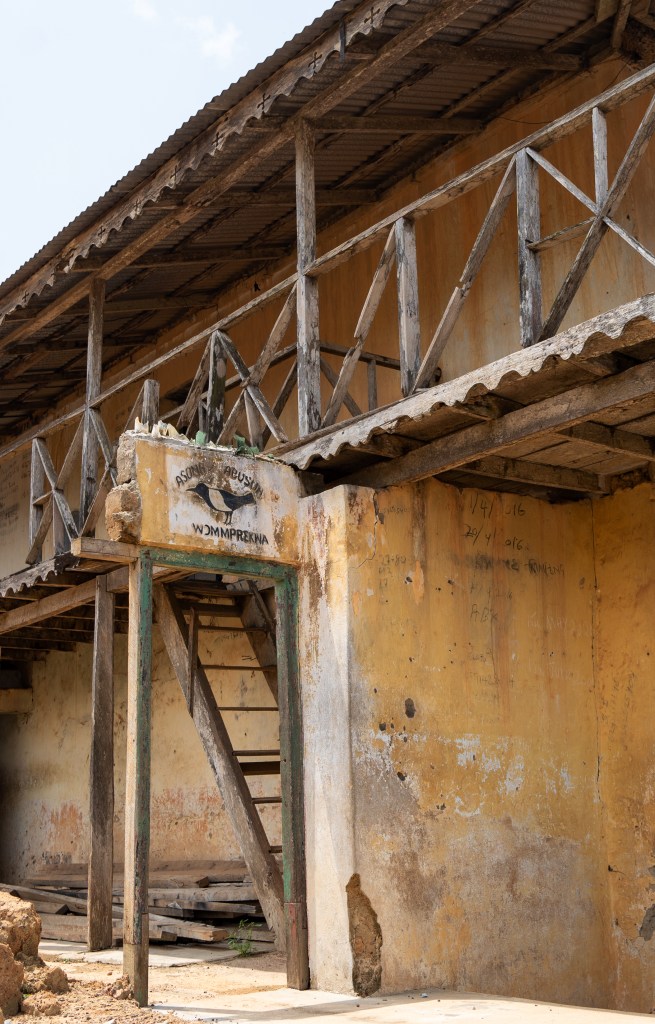
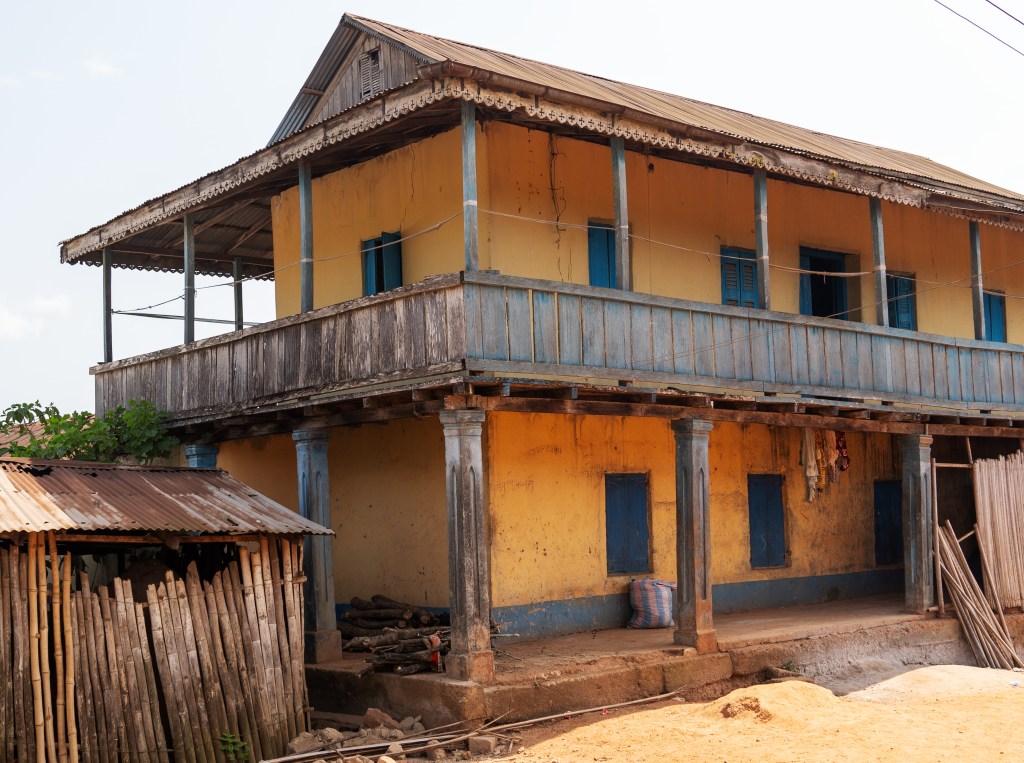
Introduced in 1879, Ghana is now one of the world’s biggest producers of cocoa. Its inextricable links to colonialism – like other European countries, the UK established forced labour regimes in Ghana to meet the British public’s demand for treats – have until recently remained unbroken. With cocoa grown only for export, the Ghanaian economy only gets a marginal slice of the chocolate industry’s pie. For years, this status quo was maintained through laws that made it almost impossible for a local chocolate industry to exist – Ghanaian businesses would have to pay duties, levies and taxes of over 59% merely to access cocoa grown on their own soil.
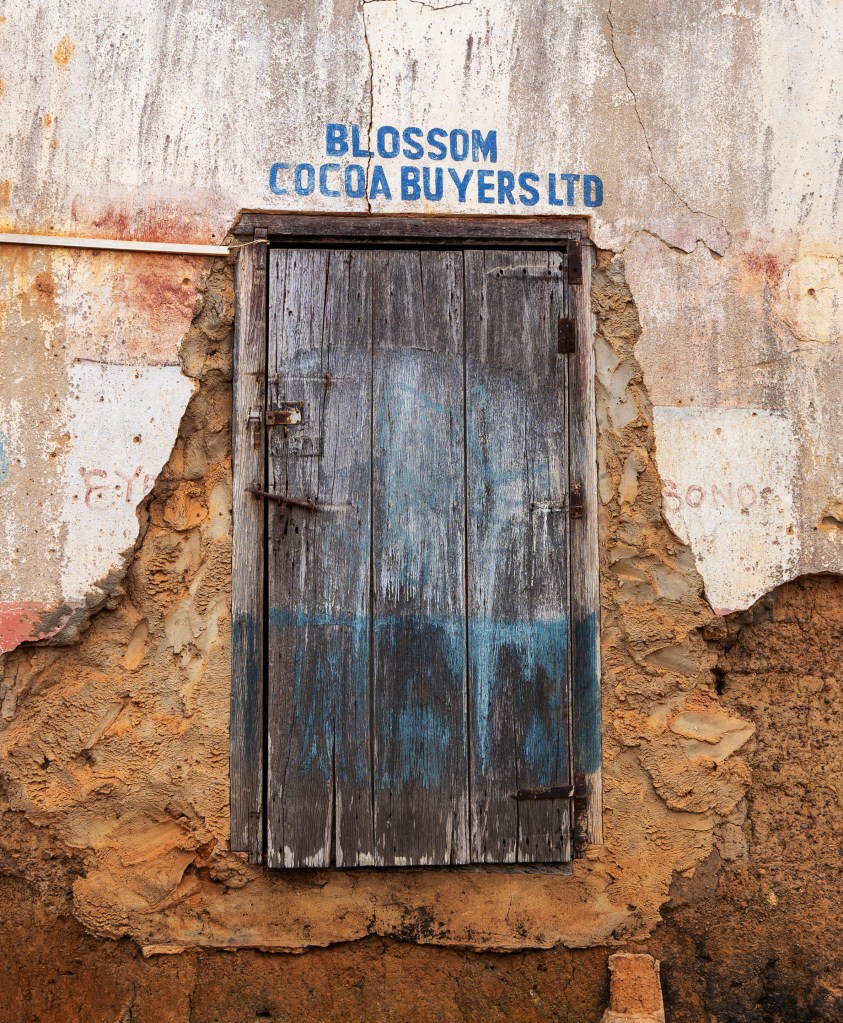
As of 2024 that’s set to change, with artisanal makers able to buy cocoa directly from the state-owned cocoa company for the first time. While Ghana’s growing chocolate industry face challenges – like lacking a domestic dairy industry, irregular power supply, and a small local market – it’s an exciting sign of things to come. I’ve sampled Bioko Treats and Fairafric, and I’m excited to try more!
As ever, thanks for reading. This one’s dedicated to Freya who shares my ancient mosque enthusiasm.
- I saw all of these within the space of a few weeks. ↩︎
 Claire Bracegirdle