This month I’ve been thinking about loss, and what’s present in its absence.
Things haven’t been the easiest recently: March featured (unwanted) skin-to-skin contact with a snake, malaria, a death threat, a gastric situation from hell and, of course, an exceptionally loud all-night prayer event to mark Good Friday. That night, bent double, feeling delirious, I could hear a pastor speaking in tongues until dawn. I spent the following two days largely asleep and then, somewhat fittingly on the day of Jesus’ resurrection, I rallied.
Maybe it’s the echoes of the Easter story, or maybe it’s reflecting on all the losses this month, but I’ve found myself thinking about presence and absence, about all the things that are no longer here but remain present in their absence.
Re-membering is an alternative to extinction. Home indeed lies among the ruins and shards that surround us all.
Lauret Savoy, Trace: Memory, History, Race, and the American Landscape
One such presently absent thing is the African Grey Parrot: I’ve heard again and again from people in the communities around the edge of Kakum National Park that the bird, which used to be seen regularly and in large numbers, has suddenly vanished. I’ve been looking for African Greys because they are, after all, one of the world’s most remarkable parrots. Their intelligence and aptitude for human language puts them up there1 with other incredible species like the Palm Cockatoo, which makes its own drumsticks to play hollow trees, and the Kea, the world’s only alpine parrot and the only thing capable of keeping New Zealand tourism in check. But they’re no longer here.


African Grey Parrots are a totem species for several of the communities and families in this area; paintings of them adorn numerous official buildings. Their popularity as pets has driven their precipitous decline (an estimated 90 – 99% of African Greys have been lost from the wild in Ghana since 1992) as millions of birds have been trafficked for sale as pets or as breeding pairs. In Agona, one person I spoke with recalled poachers spreading glue on tree branches, trapping the birds as they roost.
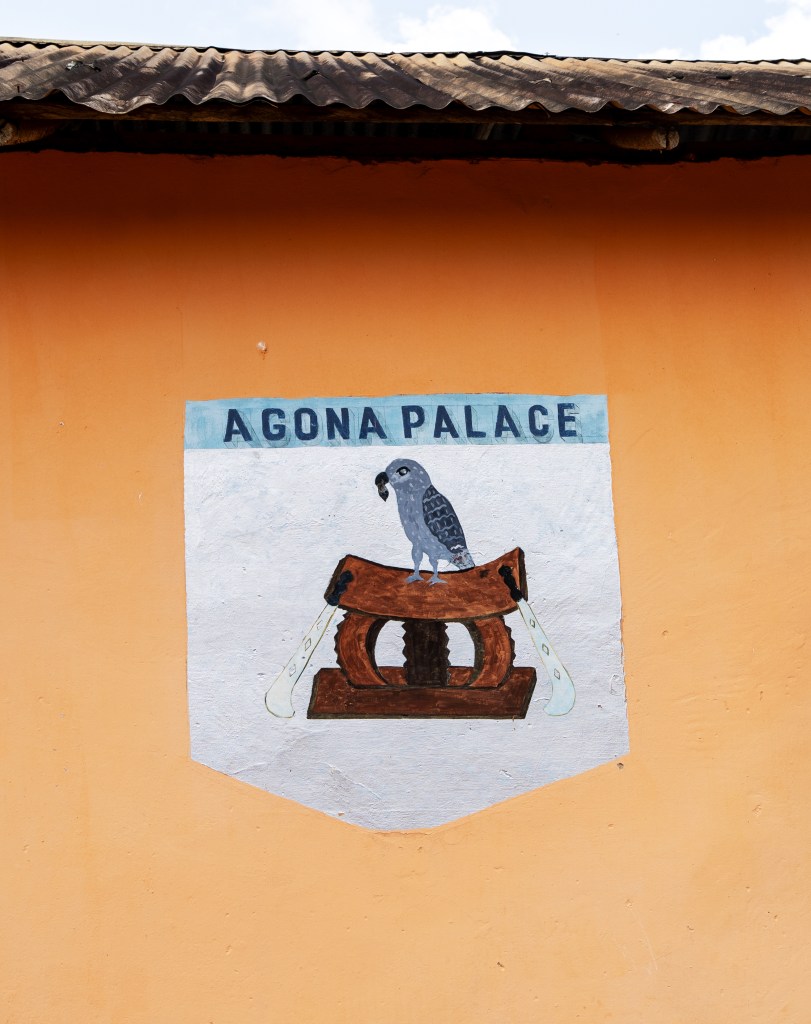
Narratives around poaching on the African continent are problematic. The contexts in which poaching happens are generally ignored or misunderstood, and the result has been increasingly militarised approaches to conservation, including the use of surveillance technology like acoustic monitoring and drones. Personally, I think the people who are really to blame in this situation are those creating the market in the first place – creating an economy where a scared parrot glued to a branch above a rural community garners a large amount of money.
I’m not immune from this criticism. My family kept pet parrots when I was a kid which is partially why I feel such an affinity with them – I spent years learning their mannerisms, how to preen the casing off their new feathers with fingernails, how they feel warm and asleep nestled into your hair. And yet (and I think my parents could agree, at least I hope so if they’re reading this) I wouldn’t keep a pet parrot again. They’re wild animals, not bred for domesticity. As I’ve been following the ghosts of African Greys I’ve appreciated this even more; people tell me about seeing and hearing huge flocks of them coming home at dusk to roost on the edge of the community, about sad it is that I’ve missed them and that if only I’d come a few years ago I’d have been seeing them daily.
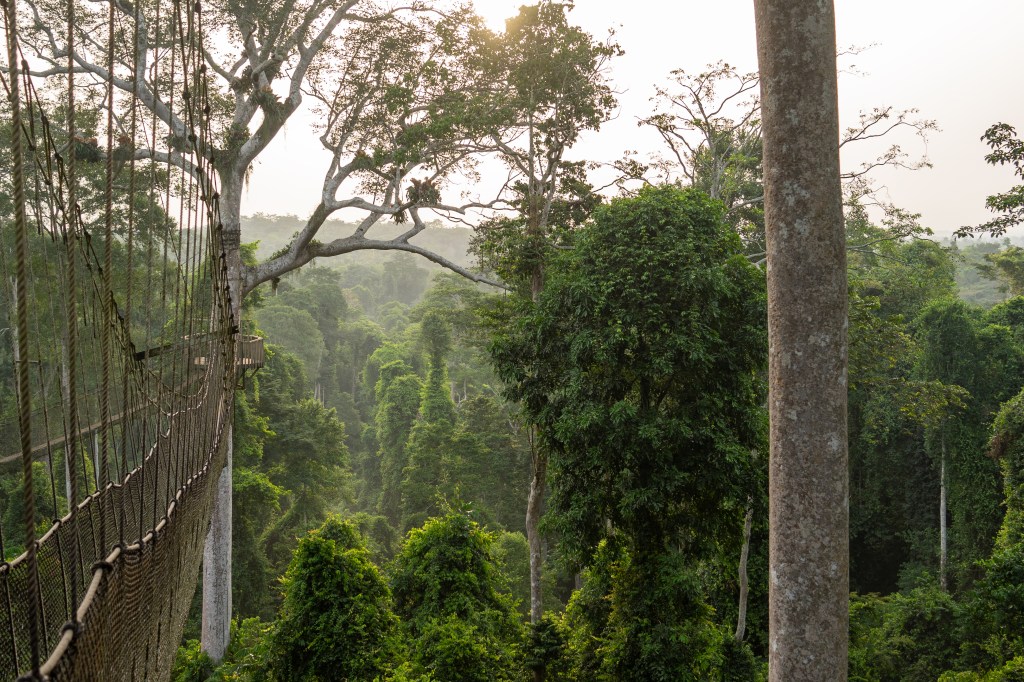
Dawn on the Kakum canopy walk. No African Grey Parrots to be seen
No one asked for my opinion, but I think if you want to have a pet (wild) bird, your best bet is to rescue a penguin from an oil spill, nurse it back to health, and then hope it decides to travel thousands of miles every year to visit.
Nobody knows exactly what substance the human heart is made of. It endures indentures and then one morning, it’s over.
“I’ve had enough,” it declares. “I can’t take any more!”
Maryse Condé, Crossing the Mangrove (passed away March 2024)
This month also brought news of the loss of journalist Rod Oram, an indefatigably curious, gracious and generous person who will be sorely missed. Rod was the father of one of my oldest friends: growing up he was a huge source of inspiration, endlessly supportive (he once arranged for me to interview veteran broadcaster John Campbell for my ‘magazine’ when I was 10) and took me to more Auckland Philharmonic Orchestra concerts than I can count. Rod embodied one of the most important capacities I think we should all cultivate: being interested. Rest well, Rod.
- I definitely think a World Parrot Of The Year award is in order. ↩︎
 Claire Bracegirdle